NewsTrendingCountries in Iran WarGlobal War Alliances
Who Will Join? Every Country Involved in the Iran-US War (2026 Full List)
Mar 30, 202611 min readClickWise Editorial
WAR ALLIANCES TRACKER — Updated March 30, 2026
When people think about the Iran-US conflict, they imagine two countries facing off. The reality is far more complex — and far more dangerous. This is a war with no clean front lines, where a dozen nations are already involved through proxies, arms deals, sanctions, and back-channel diplomacy. Some are openly picking sides. Others are playing both. Here is the full picture of who is in, who is watching, and who could tip the balance.
2
Direct Parties (US & Iran)
8+
Nations Already Involved
200,000+
Proxy Forces Mobilised
3
Nuclear-Armed Nations Watching
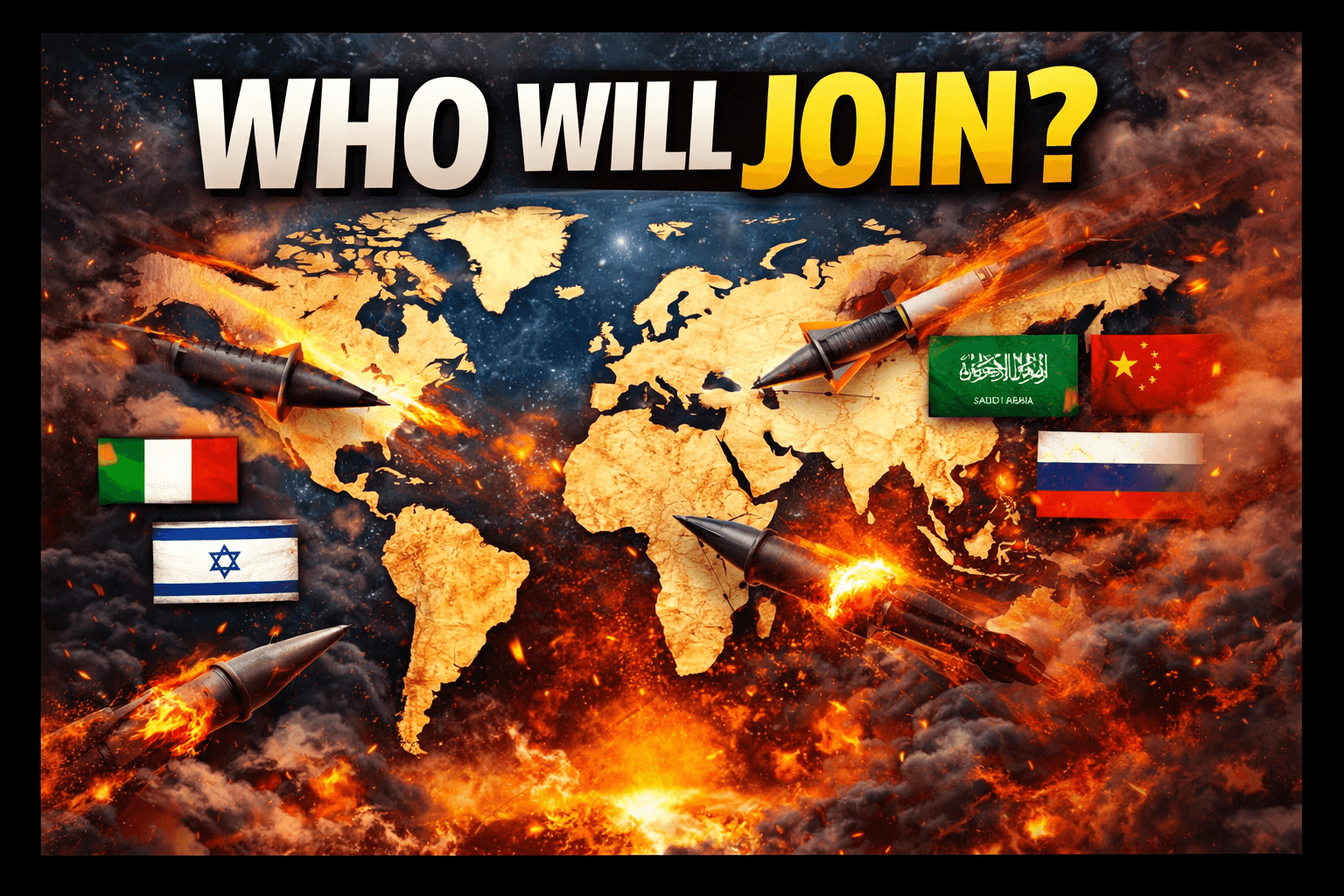
The world takes sides: every major power is calculating its position in the Iran-US conflict
▶ VideoCountries Involved in the Iran-US War — Global Alliances Explained
🇺🇸 Team USA — Who Stands With America?
The United States is not fighting alone. It has a network of formal allies, military partners, and regional powers who share its interest in containing Iran. But levels of commitment vary enormously — from countries ready to fight alongside US forces to those offering only quiet diplomatic support.
US Side — Active & Aligned
🇮🇱 Israel — The most direct and aggressive US partner. Israel views a nuclear Iran as an existential threat and has already conducted airstrikes on Iranian assets in Syria. If war breaks out, Israel is almost certain to launch its own strikes on Iranian nuclear facilities simultaneously.
🇸🇦 Saudi Arabia — Deeply hostile to Iran after years of proxy conflict in Yemen, Lebanon, and Iraq. While Saudi Arabia has sought quiet diplomatic normalisation with Iran recently, the Iranian nuclear threat overrides that. Saudi Arabia would allow US aircraft and naval forces to use its bases.
🇦🇪 UAE — Home to Al Dhafra Air Base, one of the most important US air facilities in the region. The UAE has been a quiet but critical partner in US Middle East operations and would be a key logistics hub in any conflict.
🇬🇧 United Kingdom — A member of the US-led coalition that has already conducted strikes on Houthi targets in Yemen. The UK maintains naval forces in the Gulf and would likely participate in any US-led military action against Iran.
🇯🇴 Jordan — Has shot down Iranian drones before — literally. In April 2024, Jordan intercepted Iranian drones crossing its airspace during Iran's direct attack on Israel. A reliable if quiet partner.
🇧🇭 Bahrain — Home to the US Navy's Fifth Fleet headquarters — the central command for all US naval operations in the Middle East. Bahrain is on the front line whether it wants to be or not.
🇮🇷 Team Iran — Who Backs Tehran?
Iran does not have many formal military allies. What it has built instead is the "Axis of Resistance" — a network of armed proxy groups and sympathetic states across the Middle East and beyond. Combined, these forces represent a serious asymmetric threat that no conventional military advantage fully neutralises.
Iran Side — Allies & Proxies
🇷🇺 Russia — The most powerful backer of Iran outside the Middle East. Russia has supplied Iran with advanced air defence systems and drone technology. In return, Iran supplied Russia with Shahed drones used in Ukraine. Russia will not fight for Iran directly, but it provides weapons, intelligence, and diplomatic cover at the UN Security Council.
🇨🇳 China — China imports significant Iranian oil and signed a 25-year strategic cooperation deal with Tehran. It blocks US-backed sanctions at the UN and provides Iran with economic lifelines. China will not fight, but its political and economic support is critical to Iran's survival under sanctions.
🇱🇧 Hezbollah (Lebanon) — Iran's most powerful and battle-hardened proxy. Hezbollah has an estimated 150,000 rockets and missiles pointing at Israel. If the US strikes Iran, Hezbollah is expected to open a second front against Israel — forcing Israel to fight a two-front war.
🇾🇪 Houthis (Yemen) — Already fighting. The Iran-backed Houthi movement controls northern Yemen and has fired over 100 ballistic missiles and drones at US warships and commercial shipping in the Red Sea since late 2023. They have vowed to escalate further if Iran is attacked.
🇮🇶 Iraqi Militias — A coalition of Iranian-backed militia groups in Iraq — collectively known as the Popular Mobilisation Forces — have attacked US bases in Iraq over 160 times since October 2023. They provide Iran with a land corridor to Syria and Lebanon.
🇸🇾 Syria — The Assad government in Damascus is heavily dependent on Iranian military and financial support. Syria provides Iran with the critical land corridor linking Tehran to Hezbollah in Lebanon.
⚖️ The Middle Ground — Countries Walking a Tightrope
Not every country is picking a side. Several major powers are playing a careful balancing act — maintaining ties with both the US and Iran for their own strategic and economic reasons. These nations could be the key to either de-escalation or further conflict.
Neutral — But Watching Closely
🇹🇷 Turkey — A NATO member that has deep trade ties with Iran and has refused to join Western sanctions. Turkey controls the Bosphorus Strait, a critical waterway for Russian naval movements. Ankara is pursuing its own agenda — playing both sides to maximise leverage.
🇮🇳 India — The world's most populous nation imports significant amounts of Iranian oil and has historic ties with Tehran, while also maintaining a strong strategic partnership with the US. India has consistently abstained from UN votes condemning Iran and will not join any US-led coalition.
🇵🇰 Pakistan — Borders both Iran and Afghanistan, and has a large Shia Muslim population sympathetic to Iran. Pakistan cannot be seen supporting US military action against a Muslim nation. It will stay out — but the conflict could destabilise its already fragile western border.
🇶🇦 Qatar — Home to Al Udeid Air Base — the largest US military base in the Middle East — while simultaneously maintaining diplomatic ties with Iran and Hamas. Qatar's dual role makes it the region's most important and most awkward actor.
🇴🇲 Oman — The traditional secret diplomatic channel between the US and Iran. Oman has hosted back-channel talks for decades and is currently the most important country for any diplomatic off-ramp to the current crisis.
The Proxy War Map — Conflicts Already Happening
The US-Iran conflict is not waiting for a declaration of war. It is already being fought across five different theatres simultaneously — through proxies, cyberattacks, and targeted operations:
Theatre
Who Is Fighting
Current Status
Red Sea / Yemen
US + UK vs Houthis
Active — ongoing strikes since Jan 2024
Iraq
US forces vs Iranian-backed militias
Active — drone attacks on US bases
Syria
Israel vs Iran/Hezbollah assets
Active — near-weekly Israeli airstrikes
Lebanon
Israel vs Hezbollah
Tense — major escalation possible
Cyberspace
US/Israel vs Iran
Constant — both sides attacking infrastructure
Persian Gulf
US Navy vs IRGC vessels
Tense — naval standoffs increasing
Russia: The Wild Card
Russia deserves special attention because it is the most dangerous variable in this conflict. Moscow is not an ally of Iran in the traditional sense — it has its own interests. But Russia has every incentive to see the United States bogged down in a Middle East war while it continues its operations in Ukraine.
What Russia Gains From an Iran-US War
US Attention Diverted — A major Middle East conflict forces the US to split its military and diplomatic focus away from Ukraine — exactly what Russia wants.
Higher Oil Prices — Russia is a major oil exporter. Any disruption to Middle East oil supply pushes global prices up, directly benefiting the Russian economy.
Weapons Sales — Conflict in the region drives demand for Russian weapons systems among smaller nations seeking to hedge their bets.
US Credibility Damaged — A messy or inconclusive US military engagement in the Middle East weakens American global standing — strengthening Russia's hand in Europe.
China: Calculating Every Move
China is the other superpower watching this conflict with intense interest. Beijing has spent years building economic and strategic ties across the Middle East — including with both Iran and Saudi Arabia. It brokered a surprise diplomatic normalisation between the two in 2023. China wants Middle East stability for its energy supplies, but also wants to see US power weakened globally.
China's Strategic Interests
Energy Security — China imports ~45% of its oil from the Middle East. A major war disrupting Gulf shipping directly threatens the Chinese economy — giving Beijing a real incentive to prevent full-scale conflict.
Belt and Road — China has massive infrastructure investments across the Middle East and Central Asia under its Belt and Road Initiative. War destroys the stability these projects depend on.
Taiwan Timing — Some analysts believe China is watching how the US manages this crisis to assess American military capacity and political will ahead of any future move on Taiwan.
UN Veto Power — China will block any US-backed UN Security Council resolution authorising military force against Iran — giving Iran diplomatic cover at the highest level.
The Iran-US conflict is already a regional war in all but name. The question is not whether other countries are involved — they already are. The question is whether the involvement stays at the proxy level or crosses into something far more dangerous. The alliances are forming. The positions are hardening. And the world is watching every move.
Iran's key backers include Russia (weapons and diplomatic cover), China (economic support and UN veto), and its proxy network: Hezbollah in Lebanon, the Houthis in Yemen, and Iranian-backed militias in Iraq and Syria. None of these are expected to enter direct combat on Iran's behalf.
Which countries support the USA against Iran?+
The US has the backing of Israel (most likely to conduct its own strikes), Saudi Arabia, the UAE, Bahrain (home to the US Fifth Fleet), the UK, and Jordan. Most of these partners offer basing rights, intelligence sharing, and air defence rather than ground combat troops.
Will Russia fight in the Iran-US war?+
Almost certainly not in direct combat. Russia's interest is in supplying Iran with weapons, providing diplomatic cover at the UN, and watching the US get bogged down. Direct Russian military involvement would risk a NATO confrontation that Moscow wants to avoid.
What is China's position on Iran vs USA?+
China is officially neutral but strategically sympathetic to Iran. It imports Iranian oil, has blocked UN sanctions, and signed a 25-year cooperation deal with Tehran. China will use its UN Security Council veto to prevent any international authorisation of US military force.
Will Pakistan get involved in the Iran-US conflict?+
Pakistan is very unlikely to join either side militarily. It borders Iran, has a large Shia population, and cannot be seen supporting a US attack on a Muslim nation. It will remain neutral while managing the instability on its western border.
What role does Israel play in the Iran conflict?+
Israel is the most aggressive actor after the US. It has conducted hundreds of strikes on Iranian assets in Syria over the past decade and has repeatedly stated it will not allow Iran to obtain nuclear weapons. An Israeli strike on Iranian nuclear facilities is considered highly likely if diplomacy fails completely.
#Countries in Iran War#Global War Alliances#Who Supports Iran#US Allies 2026#Breaking News