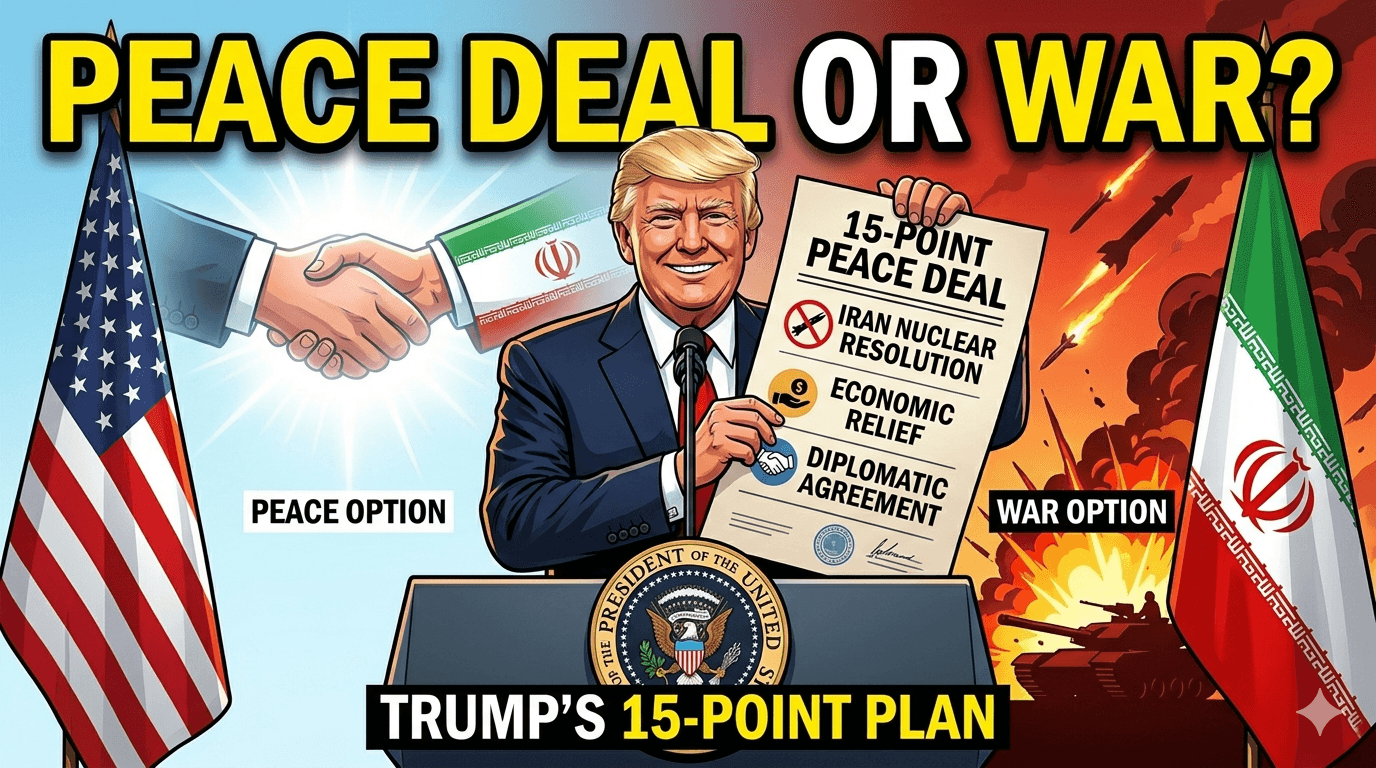
DIPLOMACY BREAKDOWN — Updated March 30, 2026
After nearly a month of war, the Trump administration has put a diplomatic offer on the table — a 15-point peace proposal delivered by US special envoy Steve Witkoff. Iran publicly rejected it within hours. But behind the scenes, messages are being exchanged. Here is every point of the plan explained, why Iran said no, and whether there is any realistic path to ending this war. If you need the full context of how this conflict began, read our World War 3 USA vs Iran explainer. Al Jazeera reported Iran's rejection in real time.
Hours
Iran Took to Reject It
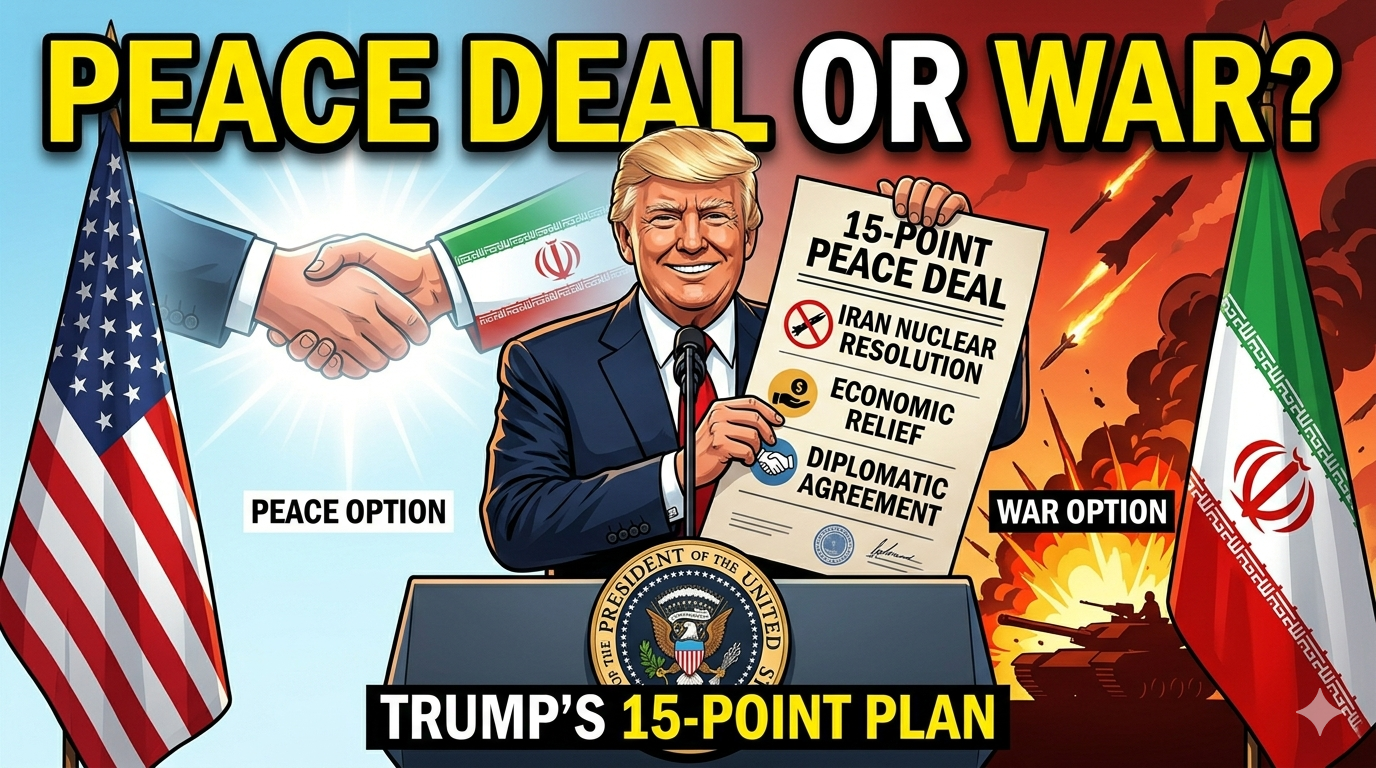
US Special Envoy Steve Witkoff delivers Trump's 15-point peace proposal — Iran rejects it within hours
Who Is Steve Witkoff?
Steve Witkoff is Donald Trump's Special Envoy for Middle East Affairs — a New York real estate developer turned diplomat who previously brokered the Gaza ceasefire deal in early 2025. Trump trusts him completely, which is why he was chosen to carry this proposal. He has been shuttling between Qatar, Oman, and other intermediaries trying to open a channel with Tehran.
The 15-Point Plan — Every Point Explained
The full text of the plan has not been officially published, but its contents have been reported by CNN, Reuters, and Al Jazeera based on diplomatic sources. Here is each point broken down:
Points 1–5: Nuclear Demands
Point 1 — Iran must permanently halt uranium enrichment above 5% purity — far below weapons-grade.
Point 2 — All enriched uranium stockpiles above 5% to be shipped out of Iran to a neutral third country within 30 days.
Point 3 — The Fordow underground enrichment facility to be permanently sealed and converted to non-nuclear research.
Point 4 — Full IAEA inspector access to all Iranian nuclear sites — including previously undisclosed locations — within 14 days.
Point 5 — Iran to sign the Additional Protocol to the Nuclear Non-Proliferation Treaty, accepting the most intrusive inspection regime available.
Points 6–10: Military & Proxy Demands
Point 6 — Iran to immediately cease all weapons transfers to Hezbollah, Hamas, Houthi rebels, and Iraqi militias.
Point 7 — Iran to publicly order the Houthis to halt all attacks on shipping in the Red Sea within 48 hours.
Point 8 — Iranian-backed militias in Iraq and Syria to stand down and return to barracks within 7 days.
Point 9 — Iran to release all US and allied citizens held in Iranian prisons — currently estimated at 9 individuals.
Point 10 — Iran to formally recognise Israel's right to exist — the most controversial demand, and the one analysts say killed the deal immediately.
Points 11–15: US Concessions to Iran
Point 11 — The US will suspend all new sanctions on Iran for 90 days pending compliance verification.
Point 12 — Iran's frozen assets abroad — estimated at $10–15 billion — to be released in tranches as compliance is verified.
Point 13 — The US will not seek regime change in Iran and will publicly guarantee Iran's territorial integrity.
Point 14 — A permanent ceasefire between US-Israeli forces and Iran to take effect within 72 hours of Iran accepting all 15 points.
Point 15 — A comprehensive new nuclear deal — replacing the collapsed JCPOA — to be negotiated within 6 months of the ceasefire.
Why Did Iran Reject It?
Iran's foreign minister Abbas Araghchi rejected the proposal publicly within hours, calling it "humiliating" and "designed for surrender, not peace." Analysts say several specific points made acceptance politically impossible for Tehran:
Iran's Key Objections
Point 10 — Recognise Israel — No Iranian government can recognise Israel and survive domestically. This point alone guaranteed rejection. It was either a negotiating tactic or a deliberate dealbreaker inserted by the Israeli side.
Point 6 — Cut Off Proxies — Iran's proxy network IS its strategic deterrence. Abandoning Hezbollah, Hamas, and the Houthis leaves Iran with no asymmetric defence — essentially defenceless against future Israeli strikes.
No Ceasefire First — The plan demands compliance before a ceasefire, not after. Iran insists on a ceasefire as the starting point for any negotiation, not the end reward.
Verification Timeline — 14-day IAEA access and 30-day uranium removal are seen as impossible timelines designed to be rejected, giving the US justification to continue strikes.
Is There Any Path to Peace?
| Scenario | Likelihood | What It Requires |
|---|
| Modified deal — Iran accepts points 1-9, 11-15 | 25% | US drops Point 10 (Israel recognition) quietly |
| Temporary ceasefire only | 35% | Both sides agree to pause without resolving core issues |
| War continues for months | 30% | Diplomatic failure — military pressure continues |
| Full escalation — ground war | 10% | Complete breakdown of all diplomatic channels |
The most realistic outcome according to analysts is a modified agreement where Point 10 is quietly dropped, Iran agrees to partial nuclear concessions, and both sides declare a ceasefire without resolving the proxy and recognition issues — essentially kicking the hardest problems down the road. Oman is currently the most active back-channel, hosting messages between Washington and Tehran. Meanwhile, the Houthi attacks on Red Sea shipping continue to add pressure on all sides to find an exit.
Further Reading — Trusted Sources
What is Trump's 15-point Iran peace plan?+
It is a diplomatic proposal delivered by US envoy Steve Witkoff to end the Iran war. It demands Iran halt nuclear enrichment, cut ties with proxy groups, and recognise Israel — in exchange for sanctions relief, asset unfreezing, and a permanent ceasefire. Iran rejected it within hours of receiving it.
Why did Iran reject the peace plan?+
Iran rejected the plan primarily because of Point 10 — recognition of Israel — which is politically impossible for any Iranian government. Iran also objected to demands it cut off its proxy network (its main strategic deterrent) and to the timeline which requires compliance before a ceasefire, not after.
Who is Steve Witkoff?+
Steve Witkoff is Trump's Special Envoy for Middle East Affairs. A real estate developer and longtime Trump associate, he previously helped broker the Gaza ceasefire deal in early 2025. He has been the primary US diplomat attempting to open back-channel communication with Iran through intermediaries in Qatar and Oman.
Is the US actually talking to Iran?+
Indirectly, yes. Iran's foreign minister confirmed that messages have been exchanged but denied formal talks. Oman is acting as the primary intermediary. Trump has publicly insisted talks are happening while Iran publicly denies direct negotiations — both statements can be technically true simultaneously.
Could a modified version of the deal work?+
Analysts believe a stripped-down version — removing Point 10 (Israel recognition) and Point 6 (cutting all proxies) — could potentially form the basis of a temporary ceasefire. However a comprehensive peace agreement resolving all underlying issues is considered unlikely in the short term.
How long could the Iran war last?+
Military analysts and Wall Street strategists have warned the war could last into late 2026 or even 2027. The US publicly wants it resolved in weeks; Iran is prepared to fight indefinitely through asymmetric means. The most likely outcome is a prolonged low-intensity conflict rather than a decisive military conclusion.