BREAKING — Updated March 30, 2026
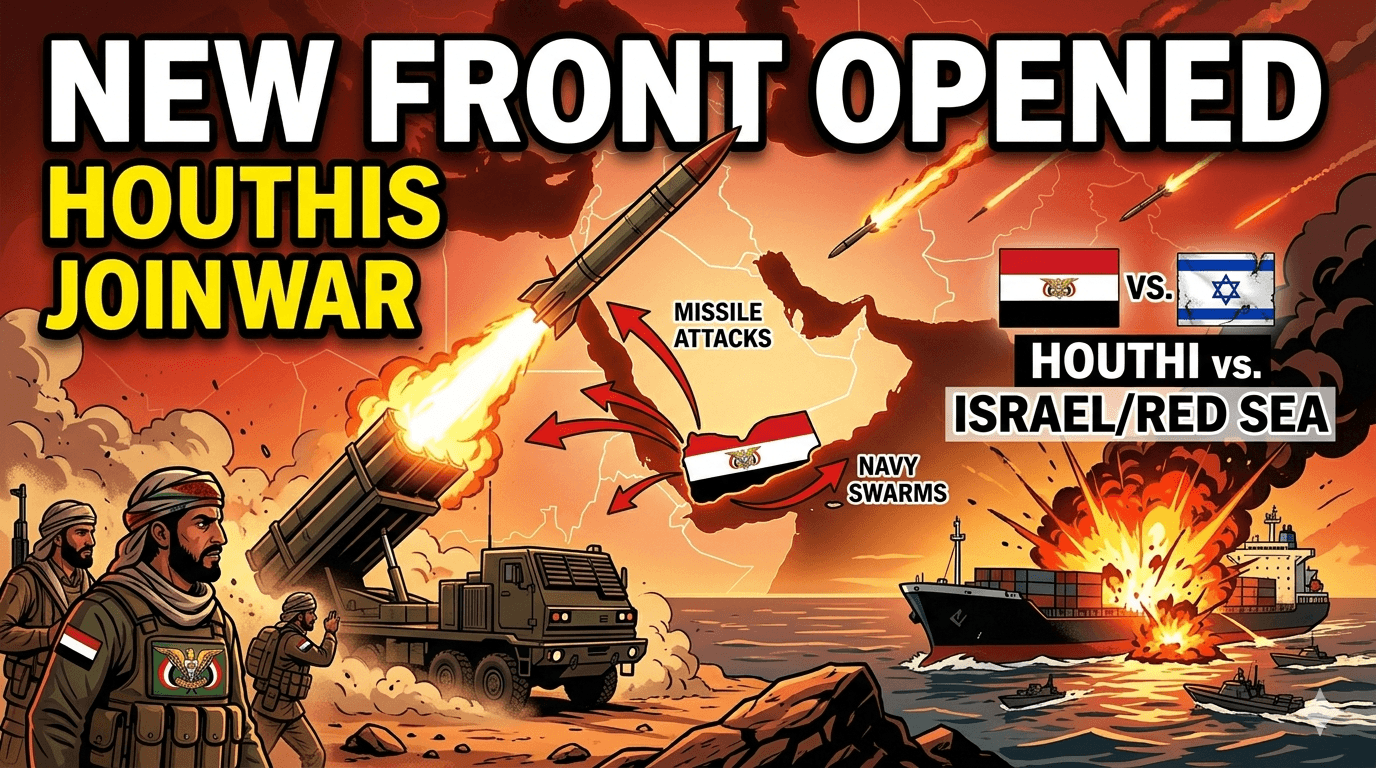
Yemen's Houthi rebels have officially entered the Iran-US war — firing ballistic missiles directly at Israeli cities and continuing their campaign against US warships in the Red Sea. This is no longer just a proxy conflict in the background. The Houthis are now a full front in a multi-theatre war. Here is who they are, why they joined, and what their involvement means for the conflict.
100+
Missiles Fired at Israel
20%
Global Oil Through Red Sea
3rd
Active War Front Opened
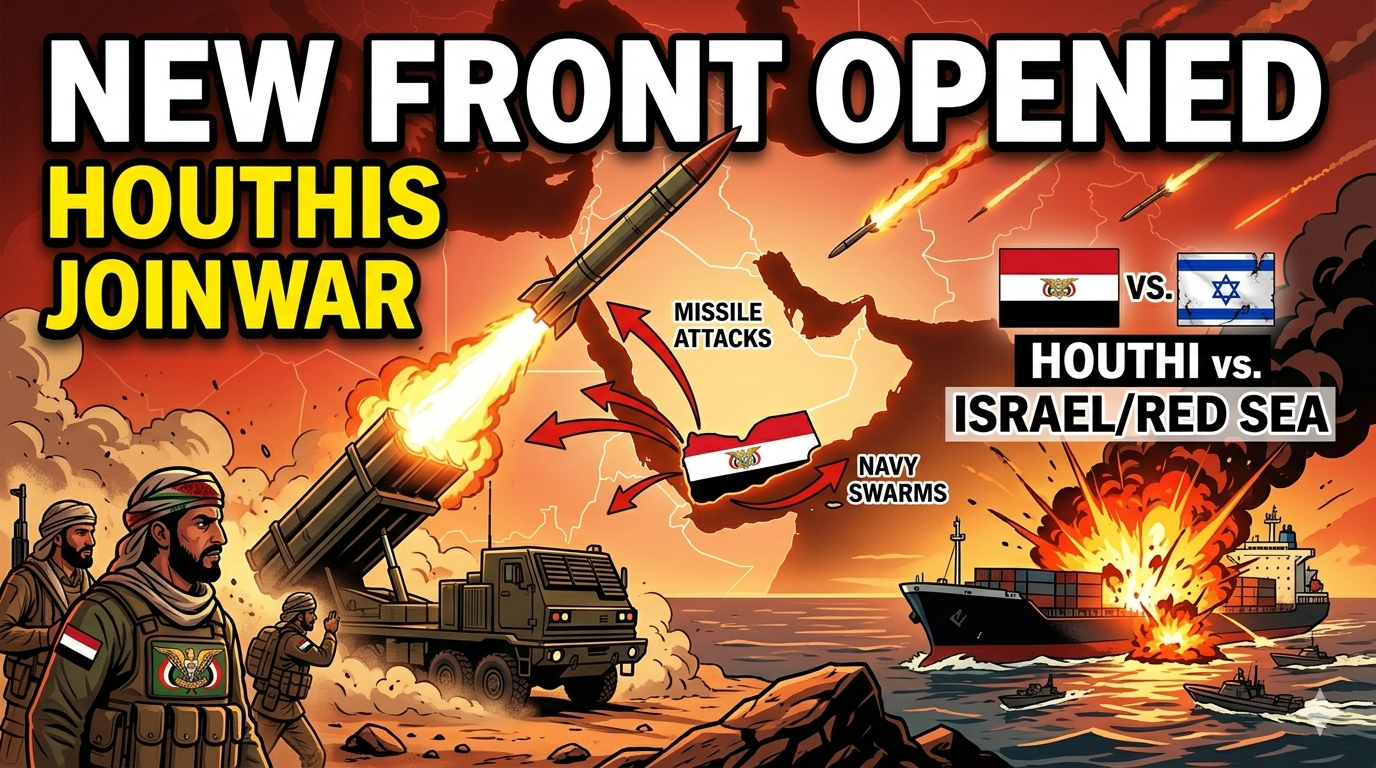
Houthi forces launch ballistic missiles toward Israel from Yemen — a new front opens in the regional war
Who Are the Houthis?
The Houthis — officially known as Ansar Allah — are a Yemeni armed movement that controls the northern part of Yemen including the capital Sanaa. They emerged in the 1990s as a religious and political movement and evolved into one of the most battle-hardened non-state military forces in the world after years of civil war against the Saudi-led coalition.
Houthi Fast Facts
Full Name — Ansar Allah — meaning 'Supporters of God'. Known internationally as the Houthis after their founding family.
Territory — Control northern Yemen including Sanaa, Hodeidah port, and most of the Red Sea coastline — giving them access to one of the world's most critical shipping lanes.
Armed by Iran — Iran has supplied the Houthis with ballistic missiles, anti-ship missiles, drones, and military training for over a decade through a network of smuggling routes.
Combat Experience — Over 10 years of active warfare against Saudi Arabia and UAE — the most combat-experienced proxy force in Iran's network.
Previous Attacks — Since October 2023, Houthis have fired over 300 missiles and drones at commercial shipping and US warships in the Red Sea, disrupting global trade significantly.
Why Did the Houthis Enter the War Now?
The Houthis did not wait to be asked. The moment the US and Israel struck Iran on February 28, Houthi leadership announced they were "joining the battle" in solidarity with Iran and the Palestinian cause. Their entry is driven by ideology, strategic calculation, and direct instruction from Tehran. For a full account of how the war started, see our World War 3 USA vs Iran breakdown. Al Jazeera's live Houthi tracker has documented every attack since October 2023.
Why They Joined
Iranian Command — The Houthis operate within Iran's Axis of Resistance and take strategic direction from Tehran. When Iran is attacked, activating the Houthi front is part of the pre-planned retaliation strategy.
Ideological Commitment — Houthi leadership views Israel and the US as existential enemies. Their slogan literally includes 'Death to America, Death to Israel' — this war is their stated purpose.
Strategic Distraction — By opening the Red Sea front and firing on Israel from the south, Houthis force Israel and the US to fight on multiple fronts simultaneously, stretching resources and attention.
Popular Support — Within Yemen and much of the Arab world, fighting Israel and the US brings the Houthis enormous public support — strengthening their domestic political position.
What Have the Houthis Done Since Joining?
| Date | Action | Target | Result |
|---|
| Mar 1–10 | Ballistic missile salvos | Southern Israel | Intercepted by Iron Dome / Arrow systems |
| Mar 12 | Anti-ship missile attack | USS Gravely (destroyer) | Missile intercepted, no casualties |
| Mar 15–20 | Drone swarm attacks | Red Sea commercial vessels | 3 ships damaged, shipping disrupted |
| Mar 25 | Hypersonic missile test-fired | Israel — Tel Aviv direction | Intercepted over Jordan |
| Mar 28 | Largest missile barrage yet | Haifa, Tel Aviv, Beer Sheva | Several intercepted, 2 hit suburbs |
| Mar 29 | Officially declared 'full war' | All US-Israel assets | Ongoing — situation escalating |
How Does This Change the War?
The Houthi entry transforms the conflict from a bilateral US-Israel vs Iran war into a genuine multi-front regional war. Israel now faces threats from four directions simultaneously: Iran (northeast), Hezbollah in Lebanon (north), Hamas remnants in Gaza (southwest), and the Houthis in Yemen (south). The US military is simultaneously managing the Red Sea front, Persian Gulf operations, and supporting Israeli air defence. This multi-front pressure is one of the key reasons Israel is now weighing a ground invasion of Iran — airstrikes alone are not enough to silence all these fronts.
Strategic Impact of Houthi Entry
Red Sea Shipping — Global shipping through the Red Sea — which handles 12% of world trade — has already dropped dramatically. Many shipping companies are rerouting around Africa, adding 10-14 days and massive costs.
Israel's Iron Dome Saturation — Simultaneous missile attacks from multiple directions risk overwhelming Israel's layered air defence systems. Each Houthi salvo forces Israel to expend expensive interceptor missiles.
US Naval Pressure — US warships in the Red Sea and Persian Gulf are now engaged on two active fronts — the Red Sea against Houthis and the Gulf facing Iranian naval threats.
Political Pressure on US — Every Houthi attack on a US ship or commercial vessel adds to domestic and international pressure on the White House to either escalate against Yemen or seek a diplomatic exit.
Further Reading — Trusted Sources
Who are the Houthis and why do they fight?+
The Houthis (Ansar Allah) are a Yemeni armed movement controlling northern Yemen. They are aligned with Iran and view the US and Israel as enemies. They have been fighting a civil war against the Saudi-led coalition since 2015 and have joined the Iran-US war in solidarity with Tehran and in opposition to Israel.
Can the Houthis actually hit Israel from Yemen?+
Yes. Yemen is approximately 1,800km from Israel, but the Houthis possess Iranian-supplied ballistic missiles with sufficient range. They have been firing at Israel since October 2023 and have continued during the current war. Most are intercepted by Israel's Arrow and Iron Dome systems, but some have gotten through.
Why can't the US just destroy the Houthis?+
The US and UK have been conducting strikes on Houthi positions in Yemen since January 2024 with limited effect. The Houthis are deeply embedded in civilian areas, use mobile launchers that are hard to target, and have enormous local popular support. Defeating them requires a ground campaign in Yemen — which no country is willing to undertake.
How are the Houthis affecting global shipping?+
The Houthis control the Bab-el-Mandeb Strait, the entrance to the Red Sea. By attacking commercial ships, they have caused a major rerouting of global trade. Traffic through the Suez Canal has dropped over 50%, with ships rerouting around Africa. This adds 10-14 days to journeys and significantly raises shipping costs and consumer prices globally.
Are the Houthis a threat to US aircraft carriers?+
The Houthis possess Iranian anti-ship missiles including the Noor and potentially the Khalij Fars — both capable of targeting large vessels. US carriers maintain substantial defensive systems and air cover. The risk to a carrier is real but considered manageable by US Navy assessments. The greater risk is to smaller vessels and commercial shipping.